In particular we focus on getting the loan structure right the first time, choosing which lenders to use in the right order (yes this is important) and finally getting our clients the best deal possible.




























The “Housing Crisis” and Capital Gains Tax (CGT) changes? Thoughts…
Marty McDonald
The housing crisis… Is it an investor tax issue?
Well-located houses in our major cities and many of our regions have become increasingly unaffordable for young families. Some would say an inter-generational crisis is unfolding and it’s hard to argue it’s not.
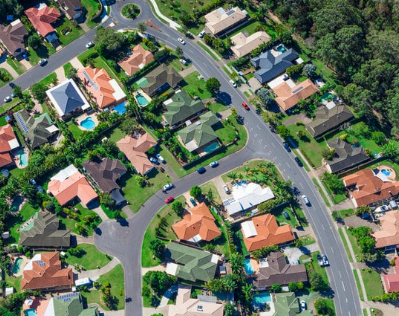
In 1985 the median house price in Sydney in a well-located middle ring suburb was about $100,000. In today’s dollars that would be only $370,000. Latest figures show that the median house price in Sydney is now about $1,700,000.
|
You can understand then that a lot of younger people reaching life milestones like getting married and having kids feel resentment towards older generations “who had it easier” and the “unfair” tax settings for property investors. One thing is clear to me though after watching this play out for the last 20+ years. Regardless of whether you think the current tax regime is too generous for property investors or not the number one contributing factor that trumps all others is that we have simply not built enough dwellings in our cities and regions in the last 20+ years to accommodate the massive increase in population. When you consider that people / families are competing against each other for a finite resource (a home) you realise that all the other contributing factors are really just secondary issues. There are too many people chasing too few houses. Other secondary factors that have added fuel to house prices (way more than tax settings in our opinion) are dual income families now becoming the norm (out-bidding / out-borrowing each other), banking deregulation (no shortage of capital to lend to all those that qualify) and structurally lower interest since the mid 1990’s. Drums beating for CGT change Changes to CGT and possibly negative gearing by the Labor government in the May budget seems inevitable. However, changes to tax settings for existing investment property owners will NOT build more houses. So ultimately will not fix the problem! ------------------------------------------------------------------------------------------ Capital Gains Tax (CGT) History
Interesting to note that there was no CGT in the pre-1985 era and there was apparently no housing crisis pre-1985. A clear indication that the issue is a supply problem.
Only the gains made above inflation were taxable but anecdotally this was quite complex to work out.
To simplify the calculation of CGT, taxpayers use a simple 50% discount to the gains made. 50% of the capital gain is added to a taxpayer’s taxable income for the year. The 50% discount was to ensure that not all of the gain was taxed as this would be partly a tax on inflation. Some argue this has been too generous as inflation adjusted gains would equate to more like a 25% or 33% discount over time. ------------------------------------------------------------------------------------------- To fix supply look at Auckland Auckland up until a few years ago had very similar problems to Sydney and other major cities in Australia. Housing supply shortages that had led to very high house price to income multiples, high rents and high levels of immigration making the problem worse every year. Their solution? The government to their credit made the bold move to override local councils’ zoning restrictions (and neighbour’s objections) and allowed owners to subdivide their typical suburban blocks into 2 smaller lots or build multi dwellings such as townhouses. This along with reduced immigration has basically solved their housing issues in a few short years. ------------------------------------------------------------------------------------------ Councils and NIMBYism are the real problem Compare Auckland to Sydney where some councils such as Kuring-Gai in Northern Sydney (middle ring and well serviced) still have a minimum lot size for a standard low-density block of 1100m2 meaning to subdivide a block in that council you must have a land size over 2200m2. Ridiculous!!
The Northern Beaches in Sydney is 700m2 in most areas which is better but still too prohibitive. If Australia is serious about fixing the housing supply issue, then they need to give the State and Federal governments powers to:
------------------------------------------------------------------------------------------- The best outcome for property owners!! This is the hard part. As property owners we all want our properties to go up in value and limiting supply is a great way to ensure that happens! Many of us also don’t want medium / high density built near us. However, I am sure I’m not alone in thinking what about the Kids! For me the least bad thing government can do is to allow infill development / medium density in our middle ring suburbs of our major cities AND limit immigration. The genie is well and truly out of the bottle so we can’t just leave things as they are. There is also no reason why a government couldn’t introduce supply initiatives as a temporary measure for say 3 years and then re-assess the impact to supply and tweak as required. |


About the Author: Marty McDonald is principal of mortgage broker “Mortgage
Experts”. Marty specialises in assisting active property investors with loan structuring advice and
implementation as well as helping credit worthy borrowers with slightly outside the box income and employment
situations. Find Marty on
Facebook and
LinkedIn.
< back
Recent Posts
- Surprise! Investor Borrowing Capacity Hasn't Fallen Off a Cliff
- Negative gearing changes - Investors borrowing capacity will likely fall 15%-30%
- The “Housing Crisis” and Capital Gains Tax (CGT) changes? Thoughts…
- Is now the time to access equity? APRA changes coming + Interest rate outlook
- Government Guarantee Scheme – an update on the changes from 1st October 2025
- Limited Deposit and don’t qualify for the government guarantee scheme? Up to 100% LVR loans available
- Government grants and schemes - to help you into the market
- Is Darwin property about to go Boom?
- Comparing interest rates (Western Democracies)
- Stage 3 Tax cuts - how will it effect your borrowing capacity?