

CONTACT US

Loan To Value Ratio (LVR)

Speak to a Lending Expert
Rated 5 stars on Google

5.0 Star Rating | 117 Reviews

What is an LVR

A loan to value ratio or LVR is the term used to describe the debt level held against a security property expressed as a percentage. So for example a $500,000 loan secured by a house worth $1,000,000 would be expressed as – 50% LVR.

The loan to value ratio is the most important ratio used in lending. Lenders will set their policy based on maximum LVRs for certain loan types and purposes. For example, a lender may have a maximum LVR of 80% for an equity loan for investment purposes, while they may have a 95% maximum LVR for an owner occupied purchase.

Please see or 95% home loan pages for the maximum LVR currently allowed and other details about the specific requirements to be approved for high LVR loans.
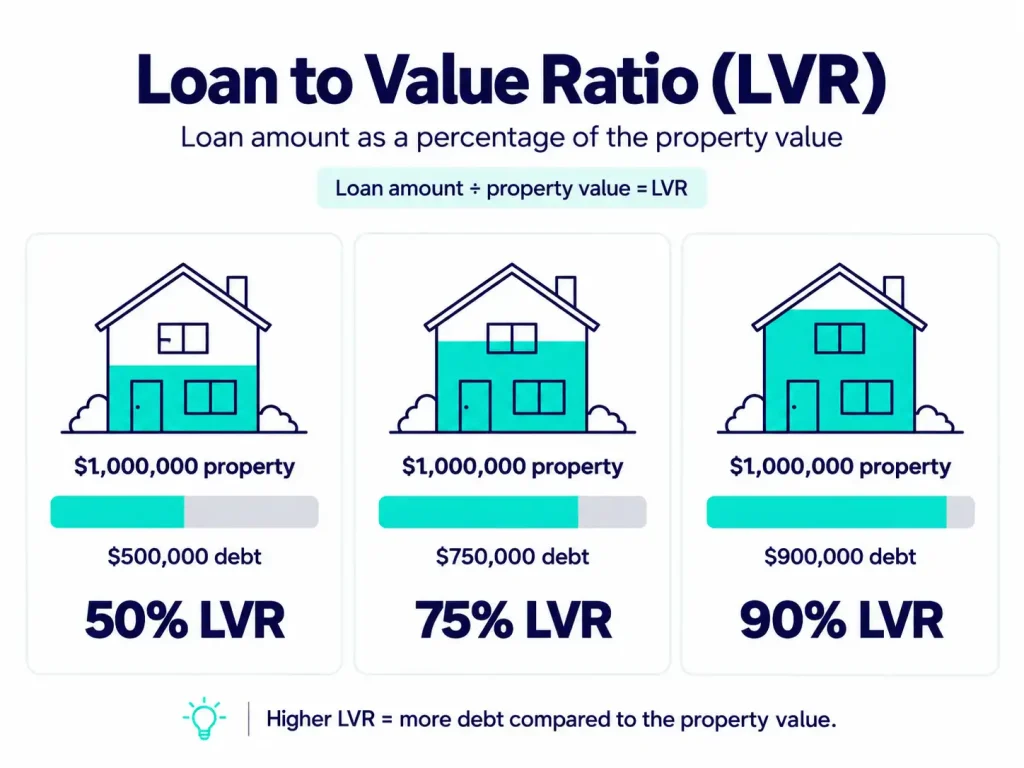
loan to value ratio

How to calculate a loan to value ratio (LVR)

Loan to Value Ratio (LVR) is calculated and expressed as a percentage by dividing the loan amount by the lower of either the purchase price or the security value. For example a $240,000 loan secured by a $300,000 house would be an 80% loan to value ratio (LVR).

LVR calculator

$
$
Your LVR
–
Enter both figures above

Purchase price or valuation for LVR

When calculating the LVR for a purchase of a property, a lender will take the lower of either their valuation amount or the contract price. Normally the price paid and the valuation amount will be the same but very occasionally the valuation will be less than the purchase price. This can cause problems with loan approvals as it means the loan to value ratio is higher than was anticipated. For high LVR loans, this will increase the mortgage insurance premium charged. Also if the valuation is significantly lower than the purchase price, it can sometimes cause a loan to be declined as it would then fall outside the lenders maximum LVR guidelines.

For other sorts of transactions, such as a refinance, the valuation amount will always be used over the client’s estimated value for calculating the LVR.

We have access to one lender who will consider using the valuation amount if it is higher than the purchase price, on the provision that the contract for sale is older than 3 months. This can be useful for off the plan purchases where the market in general has increased and a borrower wishes to gear up as much as possible.

Ordering valuations upfront if the LVR is crucial

At Mortgage Experts we can order valuation upfront with some lenders. This eliminates the need to submit a loan application if the valuation amount / LVR is crucial to the likelihood of the high LVR loan being approved.


High LVR Mortgage Experts

Are you Looking for a high LVR loan? Contact Mortgage Experts today on (02) 9979 3037
 

GET STARTED

100% Obligation-Free Advice

Time is precious so don’t waste yours by trying to navigate the mortgage market by yourself. We really do care about our clients. We are here to help guide you through the loan and buying processes.

It’s all we do.

Speak to a Lending Expert
Marty mortgage experts

REVIEWS

What our clients say

YOUR COMPLETE HOME LOAN SOLUTION

Related Services

CALCULATORS

Home Loan Calculators

Get a clearer picture of your numbers before you speak to a Mortgage Broker. These calculators give you quick estimates of what you could borrow, repay and spend.

Frequently Asked Questions

FAQs

Can I prevent paying LMI (Lenders mortgage insurance)?


If you have a minimum 20% deposit you won’t have to pay LMI, but there are a few ways to get around it if you don’t quiet have enough deposit.

You can ask a parent or close relative to go guarantor for you, which means they put up their property as security to cover the gap in the deposit.

There are also some professions ie. Lawyers, Medical doctors and accountants that lenders will offer an LMI waiver, typically which have job security and are highly paid that can be exempt from paying LMI, as the lenders will waive this additional fee.

The government also offers first home buyer assistance schemes where as long as you have 5% deposit, they will guarantee the amount over 5% and up to 20%, so you don’t have to pay any LMI. These do come with property price caps depending on city and regional areas, so do your homework before starting your property journey.

How do you calculate loan to value ratio?


The Loan-to-Value Ratio is calculated by dividing the loan amount by the purchase price or valuation of the property you’re buying, expressed as a percentage.

How do you calculate the value of a property?


Most residential property values are based on a direct comparison with recent comparable sales, though valuers may also consider the size and types of rooms, fixtures and fittings, building condition, location, block layout, and a variety of other aspects.

If real estate agents and brokers who work with investor clients are to do their jobs properly, they must understand income property valuation methods. To determine the current value of a property under consideration for purchase, a common valuation method combines income and the capitalisation rate.

In addition to determining a property’s market value, one of the first things you should do as a real estate investor considering purchasing a property is to determine its operating income and costs. This data will tell you whether the property meets your cash flow and profitability targets.

What is a good loan to value ratio?


If you’re taking out a conventional loan to buy a home, an LTV ratio of 80% or less is ideal.

Call (02) 9979 3037